
Sunderland Royal Hospital and Kidney Beam Launch Innovative Digital Health Pilot
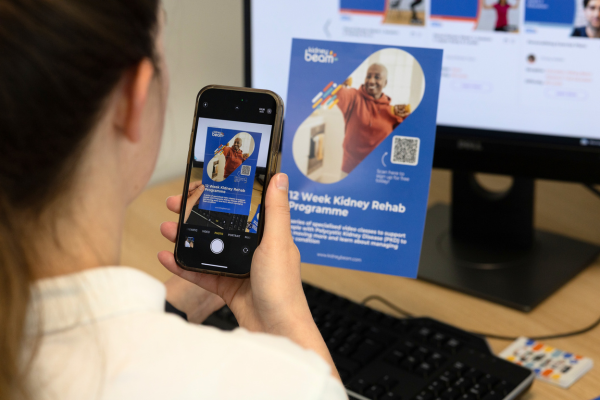
Sunderland Royal Hospital has partnered with Kidney Beam to launch an innovative new pilot aimed at supporting patients with kidney disease to increase their physical activity and improve self-management.
The programme will combine online physiotherapy, tailored education, and health coaching, offering patients access to physio-led exercise sessions and condition-specific education classes through Kidney Beam’s clinically-proven digital platform.
Through a newly-established clinical referral pathway, up to 50 patients will be enrolled in the pilot. Patients will be led through a 12-week intervention, in which health coaches will support participants to complete a virtual programme of targeted physical activity and education tailored to their clinical status, such as prehabilitation ahead of transplant, dialysis exercises, or post-transplant rehabilitation.
Aisling Barrett, Specialist Kidney Dietitian at Sunderland Royal Hospital, said: “From a clinician’s point of view, it’s very important that kidney patients incorporate activity into their daily routine. People with chronic kidney disease are in a state of muscle breakdown, and it’s vital to prevent this by keeping patients independent and mobile.”
“The Kidney Beam programme offers a flexible and accessible way to get kidney patients involved in activity. It helps patients to build their confidence with exercise, as many can be hesitant to start, but as the support is coming from an approved kidney programme it helps with engagement. In my line of work as a kidney dietitian, having a patient that is able to stand and cook or do the grocery shopping impacts greatly on their nutritional status and overall wellbeing.”
The pilot reflects a growing recognition across the NHS of the role digital health platforms can play in improving long-term condition management, addressing health inequalities, and supporting the “3 shifts” towards community-based, preventive and digital healthcare laid out in the 10-Year Plan.
Professor Sharlene Greenwood, co-founder of Kidney Beam and consultant physiotherapist at King’s College Hospital London, said: “Many people living with kidney disease struggle to stay active due to the challenges of their condition, despite physical activity being proven to slow down disease progression. Through our virtual platform and new health coaching service, we are offering patients the tools and confidence to build activity safely into their daily lives, and to better understand how to manage their kidney condition. We are so pleased to have launched the service with the teams at Sunderland Royal Hospital’s renal unit, enabling us to help support patients in Tyne and Wear to improve their kidney health.”
Kidney disease affects 1 in 10 adults in the UK, and costs the economy £7 billion annually, according to Kidney Research UK. With prevalence and strain on NHS services growing, the urgency for innovative solutions has never been greater. However, only 3 out of 72 NHS sites currently offer kidney-specific rehabilitation programmes, due in part to a shortage of skilled professionals.
Kidney Beam is the UK’s first clinically-proven online physiotherapy and wellbeing platform tailored for people living with kidney disease. Named as one of 2024’s NHS Innovation Accelerator companies, winner of the “Company Generating the Greatest NHS Benefit” award from the DigitalHealth.London Accelerator, and also winner of “Best Digital Health Solution” at the Prix Galien UK Awards 2025, it is already being used by thousands of patients across the UK.
Evidence from our landmark clinical trial, published in the Lancet Digital Health, shows a significant improvement in patient-reported quality-of-life, as well as cost efficiencies for the NHS. The clinical trial was funded by Kidney Research UK and developed in partnership with clinicians at Kings College Hospital London.
Insights from this latest pilot - which is also being rolled out in the coming months in NHS sites in London, the Midlands and Scotland - will help inform future plans for scaling digital-first kidney rehabilitation further across the NHS.